10 Mental Health Poster Ideas to Inspire Positive Change
Mental wellness is something we all need to nurture — and one of the most creative ways to do that is through visual art. A well-crafted mental health poster can transform any wall into a source of daily encouragement, gentle reminders, and emotional strength. Whether you’re a teacher, therapist, parent, or someone who simply wants to uplift their own space, these ideas are made for you.
In this article, you’ll discover 10 original, DIY-friendly mental health poster ideas — each with full instructions, materials, and creative tips you can act on today.
1. The “You Are Enough” Affirmation Poster
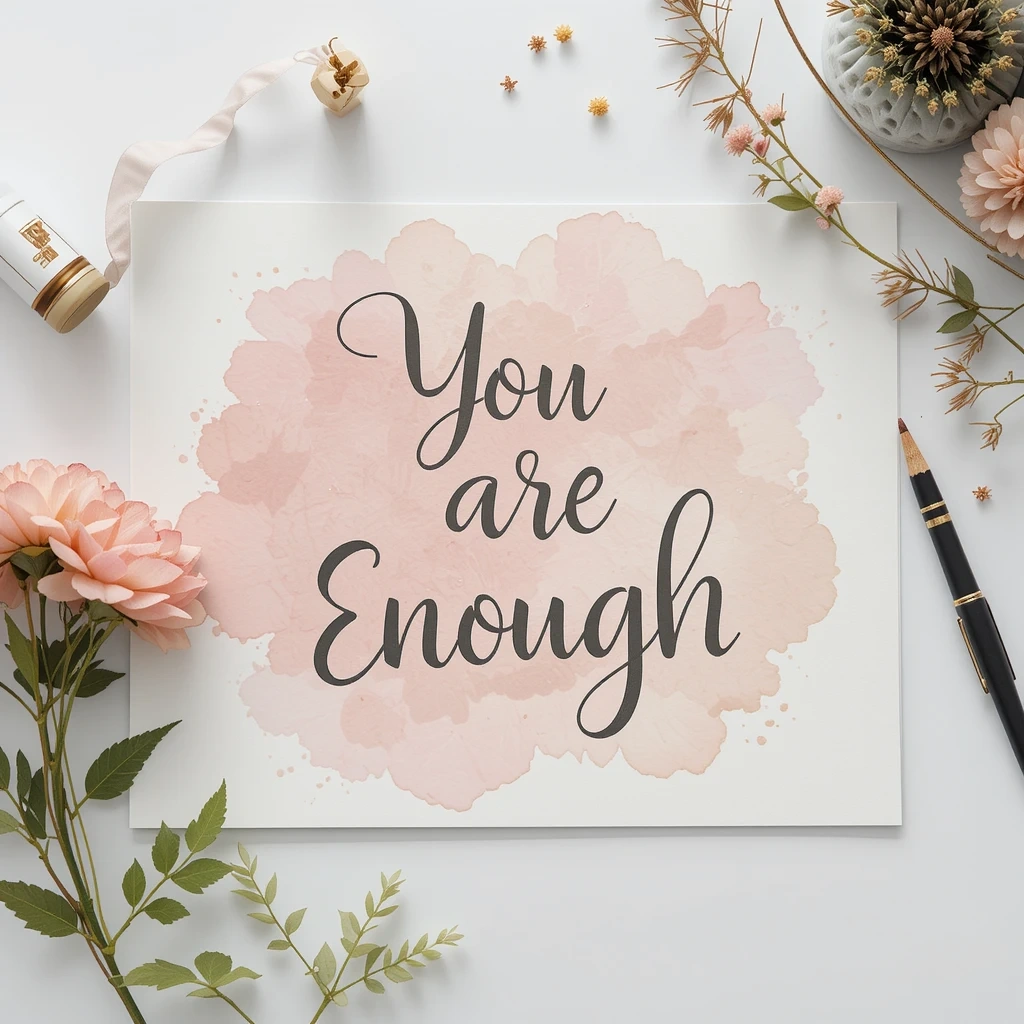
This is one of the most universally loved mental health messages — simple, soft, and deeply needed. Design it in a minimal style with gentle typography and a pastel background to keep the energy calm and warm. It works beautifully in bedrooms, therapy offices, and school hallways.
Materials:
- A4 or letter-size cardstock or watercolor paper
- Fine-tip markers or brush pens (in soft colors)
- Ruler and pencil for light guidelines
- Optional: watercolor paints for background wash
Steps / How to Create:
- Lightly pencil horizontal guidelines across your paper.
- Paint or color a soft pastel wash across the background — lavender, blush, or sage work beautifully.
- Let it dry fully, then write “You Are Enough” in bold, clean lettering centered on the page.
- Add small decorative elements like stars, dots, or tiny botanicals around the text.
- Erase pencil lines and let dry.
Time & Difficulty: 20 minutes | Easy
Best Use Case: Bedroom wall decor, therapy waiting rooms, personal self-care practice
Creative Variation: Add a secondary line in smaller font — “Always have been. Always will be.” — for extra emotional depth.
2. The Feelings Wheel Poster
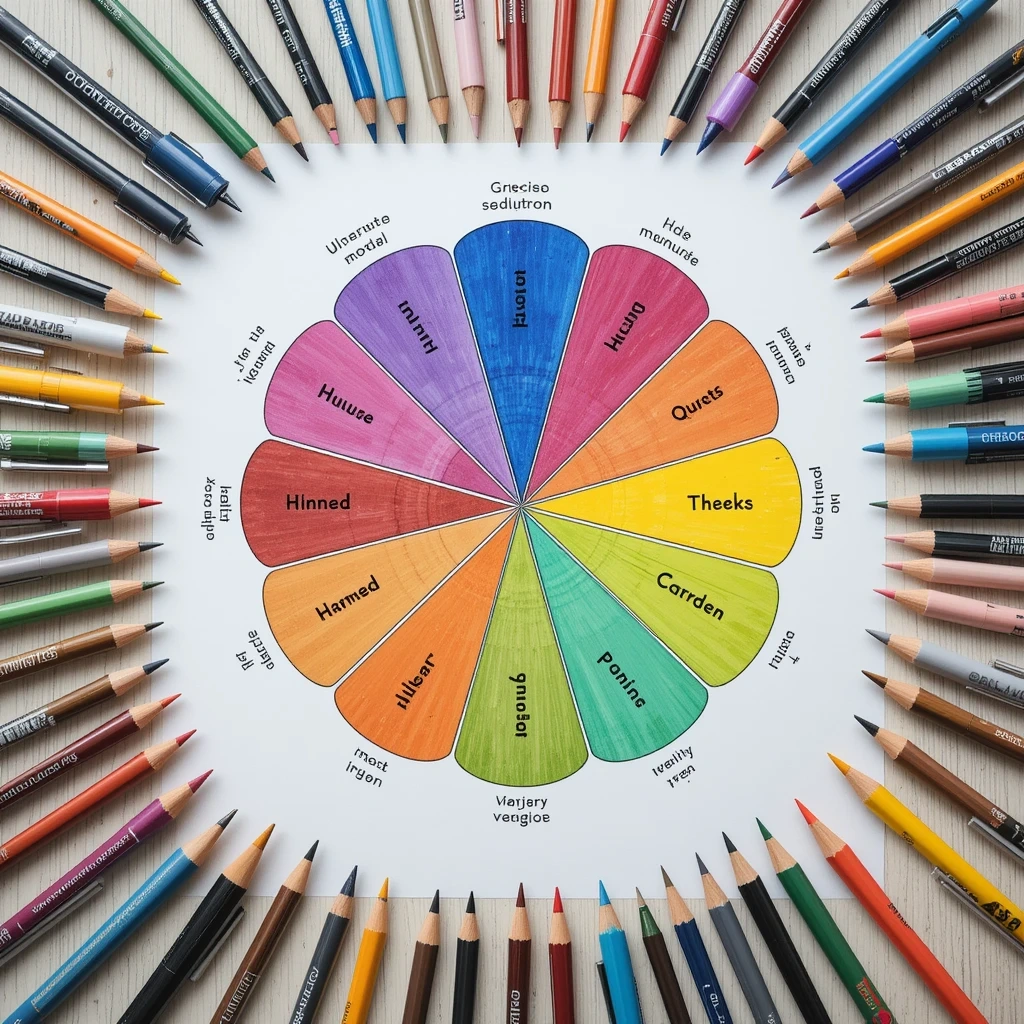
A feelings wheel helps people identify and name their emotions — which is one of the most foundational skills in emotional intelligence. This poster is especially useful in classrooms, therapy rooms, and family spaces. It’s educational and beautiful at the same time.
Materials:
- Large white poster board or thick paper
- Compass or circular template
- Colored markers or gel pens
- Ruler and pencil
Steps / How to Create:
- Draw a large circle in the center of your paper using a compass.
- Divide the circle into 6 equal sections (core emotions: happy, sad, angry, scared, surprised, disgusted).
- Draw a second ring around it with more nuanced emotions branching from each core.
- Color-code each section in matching shades (e.g., yellow for happy, blue for sad).
- Label each emotion clearly in small, readable print.
- Add a title at the top: “How Are You Feeling Today?”
Time & Difficulty: 30 minutes | Medium
Best Use Case: Classrooms, therapy offices, family kitchen or living area
Creative Variation: Add a personal “check-in” box at the bottom where viewers can circle or mark how they feel that day.
3. The Daily Gratitude Poster
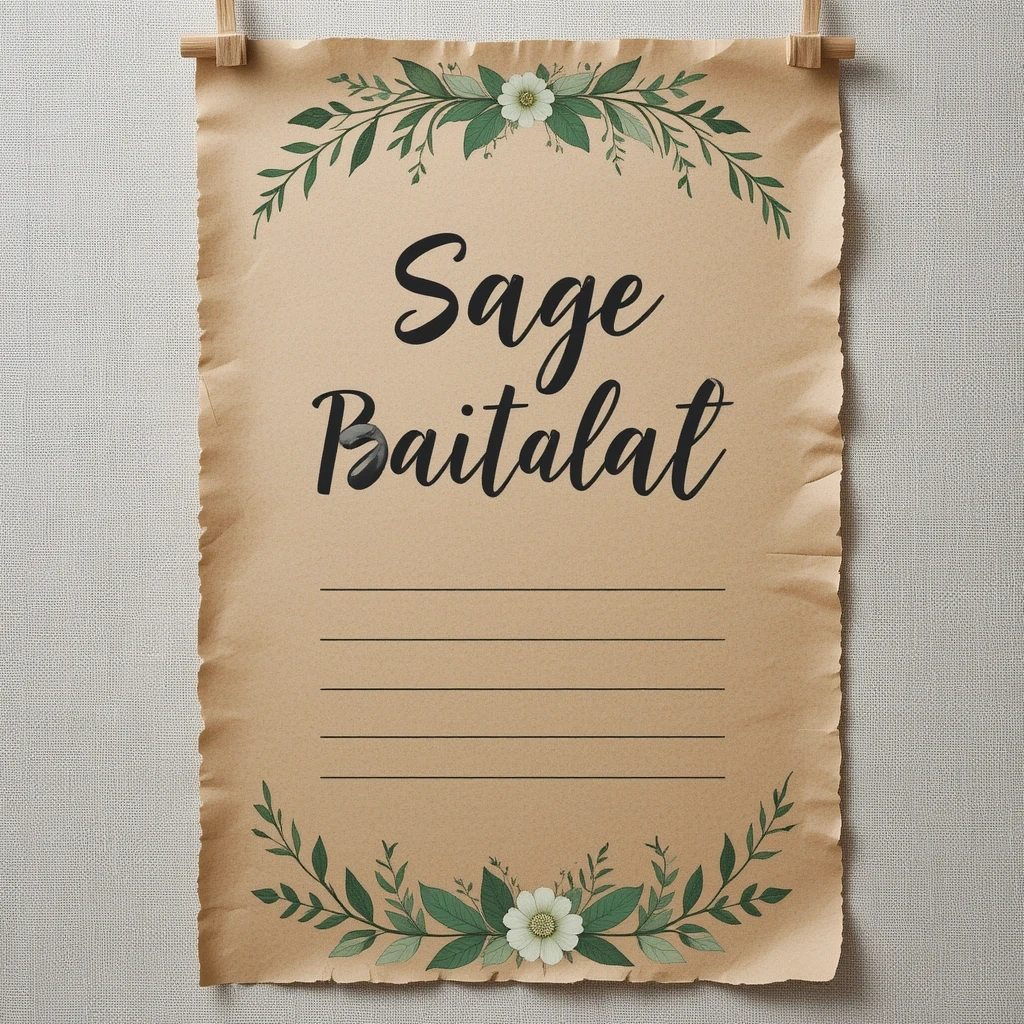
Gratitude practice is one of the most research-backed tools for improving mental wellbeing. This poster serves as a beautiful daily prompt — a visual cue to pause, reflect, and appreciate. Display it somewhere you see every morning for maximum effect.
Materials:
- Kraft paper or white cardstock
- Black fine-tip marker or calligraphy pen
- Watercolor paints (optional)
- Washi tape or twine for display
Steps / How to Create:
- Write “Today I Am Grateful For…” in large decorative lettering at the top.
- Below, draw three to five blank lines with subtle leaf or flower illustrations beside each.
- Add a soft watercolor border in sage green or warm amber.
- Leave space intentionally blank — the poster is meant to be written on with a dry-erase marker or new sticky notes daily.
Time & Difficulty: 15 minutes | Easy
Best Use Case: Personal morning routine, kids’ room, mindfulness corner
Creative Variation: Laminate the finished poster so you can use a dry-erase marker on it and reuse it every single day.
4. The Self-Care Checklist Poster
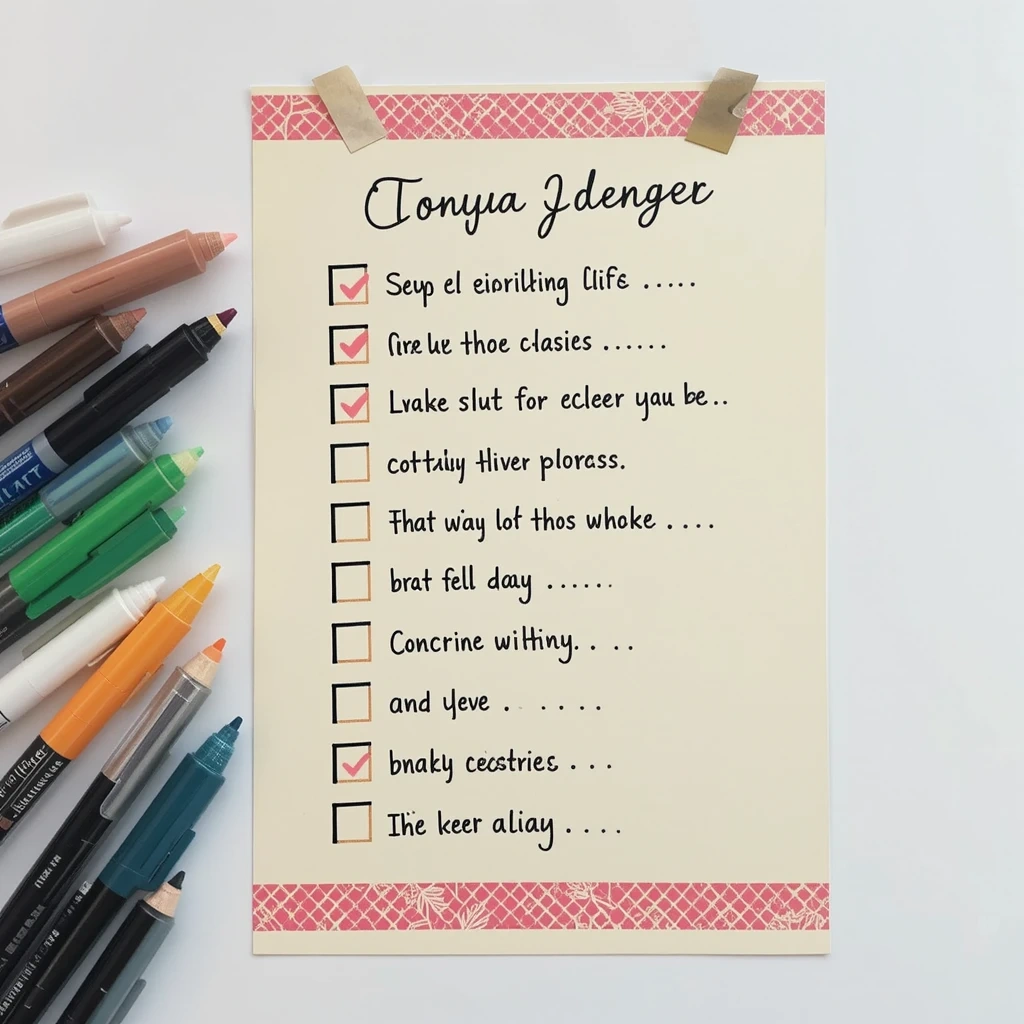
Turn daily self-care habits into a visual, motivating display. This poster acts as both a reminder and a gentle accountability tool. It’s especially helpful for people managing anxiety, burnout recovery, or depression.
Materials:
- White or cream cardstock
- Colored pens or markers
- Small stickers or stamps (optional)
- Washi tape for decoration
Steps / How to Create:
- Create a title at the top: “My Daily Self-Care.”
- List 8–10 simple self-care actions (drink water, take a walk, call a friend, breathe deeply, etc.).
- Draw a small checkbox or heart next to each item.
- Decorate the borders with simple shapes — leaves, stars, or abstract doodles.
- Hang near your mirror or desk for daily visibility.
Time & Difficulty: 20 minutes | Easy
Best Use Case: Personal bedroom, bathroom mirror, work-from-home desk
Creative Variation: Make a color-coded version where physical, emotional, and social self-care items are in different colors.
5. The “It’s Okay To…” Permission Poster
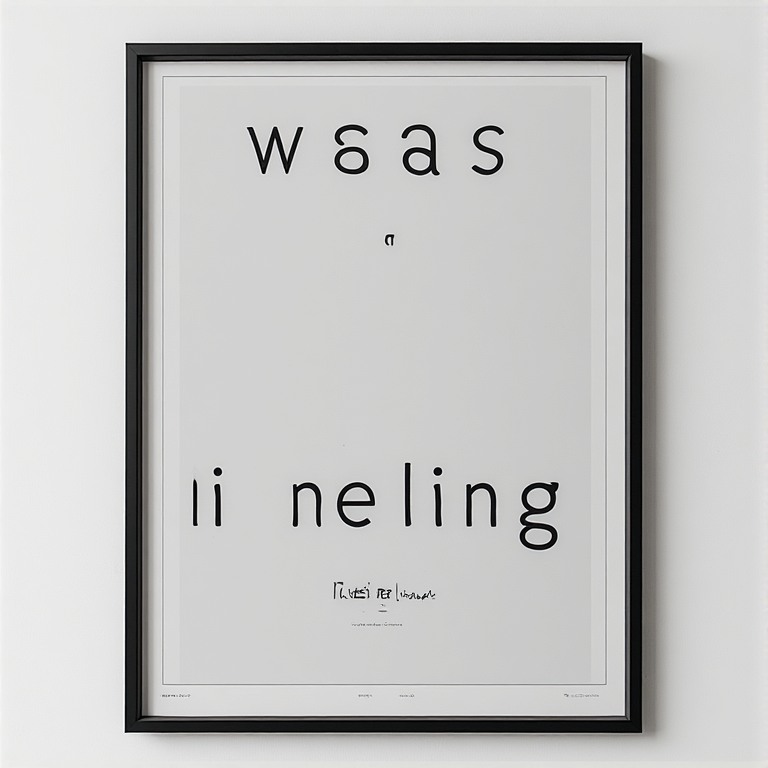
Sometimes people just need permission to rest, feel sad, ask for help, or say no. This poster is quietly revolutionary. It normalizes human emotion in a compassionate, non-judgmental way and is perfect for any space where people feel pressure to perform.
Materials:
- White or light gray cardstock
- Black brush pen or printed typography
- Soft colored pencils for accents
- Frame (optional)
Steps / How to Create:
- Start by listing 6–8 “It’s Okay To…” statements (e.g., “It’s okay to not be okay,” “It’s okay to ask for help,” “It’s okay to change your mind”).
- Alternate font sizes — make some lines bold and larger, others smaller and softer.
- Add a thin decorative border using colored pencils or a simple pattern.
- Frame it for a polished, gallery-worthy finish.
Time & Difficulty: 20 minutes | Easy
Best Use Case: Therapy rooms, school counselor offices, shared living spaces, mental health events
Creative Variation: Turn it into a collaborative piece — invite others to add their own “It’s okay to…” statements with sticky notes.
6. The Breathing Exercise Poster
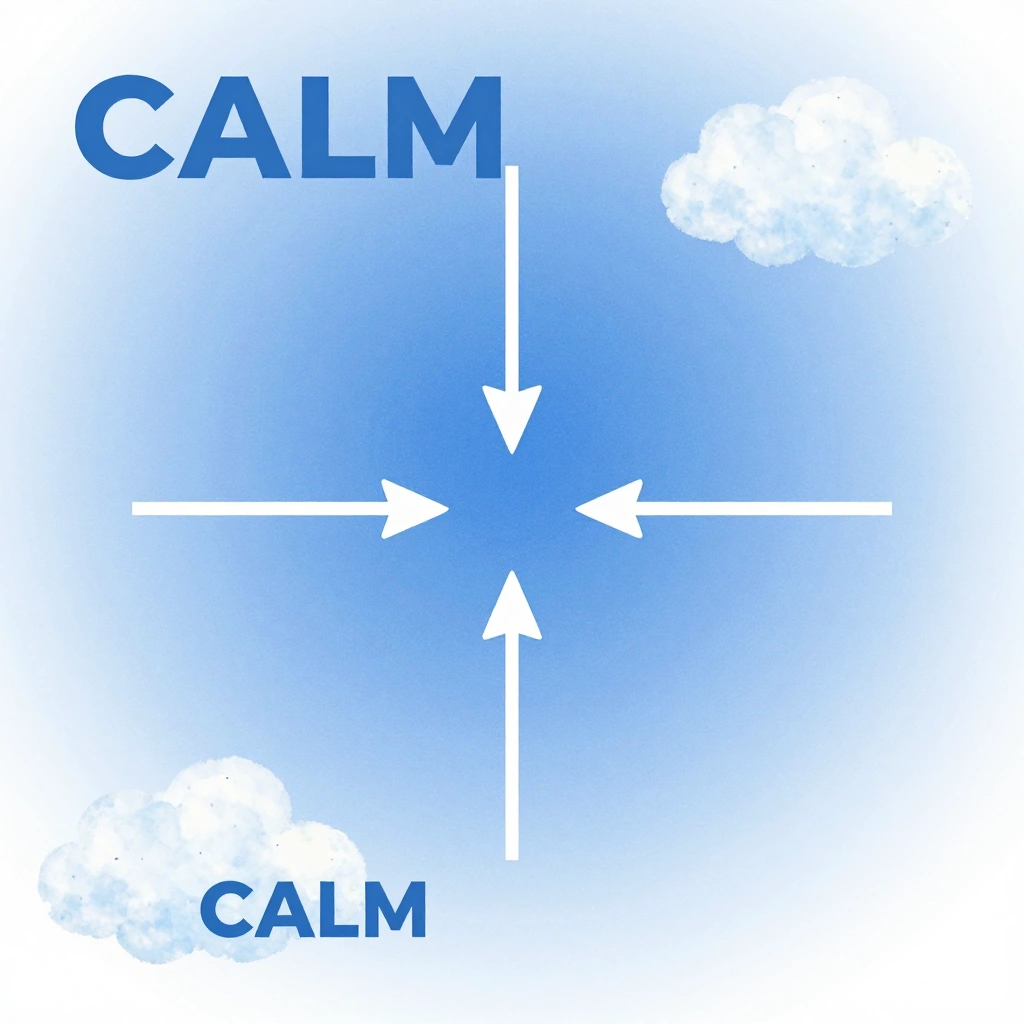
When anxiety hits, having a visual breathing guide nearby can make all the difference. This mental health poster is both functional and calming — it teaches box breathing or 4-7-8 breathing in a clear, approachable way.
Materials:
- White cardstock
- Blue or purple markers
- Ruler and compass
- Optional: printed icons or arrow stencils
Steps / How to Create:
- Draw a simple square in the center of the page (for box breathing).
- Label each side of the square: “Inhale 4,” “Hold 4,” “Exhale 4,” “Hold 4.”
- Add arrows around the square showing the breathing direction.
- Include a title: “Breathe Through It.”
- Use calming blues and purples to reinforce a sense of peace.
Time & Difficulty: 15 minutes | Easy
Best Use Case: Therapy waiting areas, classrooms, home anxiety toolkit, hospital rooms
Creative Variation: Create a wave-style version for 4-7-8 breathing with a flowing ocean wave illustration instead of a square.
7. The Growth Mindset Quotes Poster
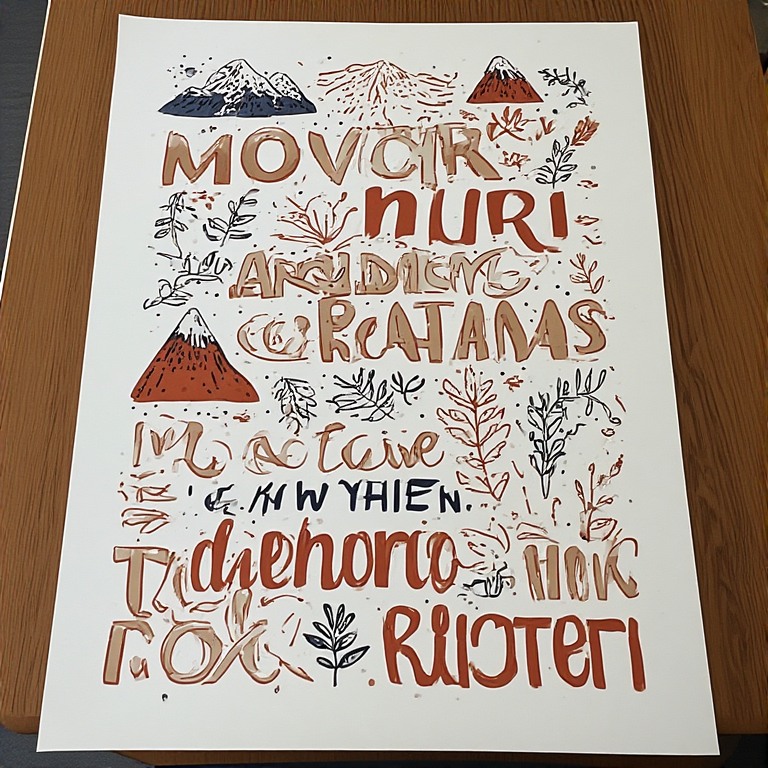
A cluster of carefully chosen growth mindset quotes can shift perspective on hard days. This mental health poster idea works especially well in schools, offices, and creative workspaces. Choose quotes that feel human and real — not toxic positivity.
Materials:
- Large white or off-white paper
- Mix of marker sizes for varied typography
- Watercolor or colored pencil accents
- Washi tape borders
Steps / How to Create:
- Select 5–7 powerful growth mindset quotes (by real figures or original affirmations).
- Arrange them across the page in a scattered, editorial-style layout — not a straight list.
- Vary font sizes to create visual hierarchy and interest.
- Add small hand-drawn illustrations between quotes — mountains, plants, stars.
- Use warm earthy tones to keep the mood grounded.
Time & Difficulty: 25 minutes | Medium
Best Use Case: Classrooms, home offices, teen bedrooms, community centers
Creative Variation: Feature only one quote in giant lettering for maximum visual impact as a focal-point wall piece.
8. The “My Calm-Down Kit” Poster
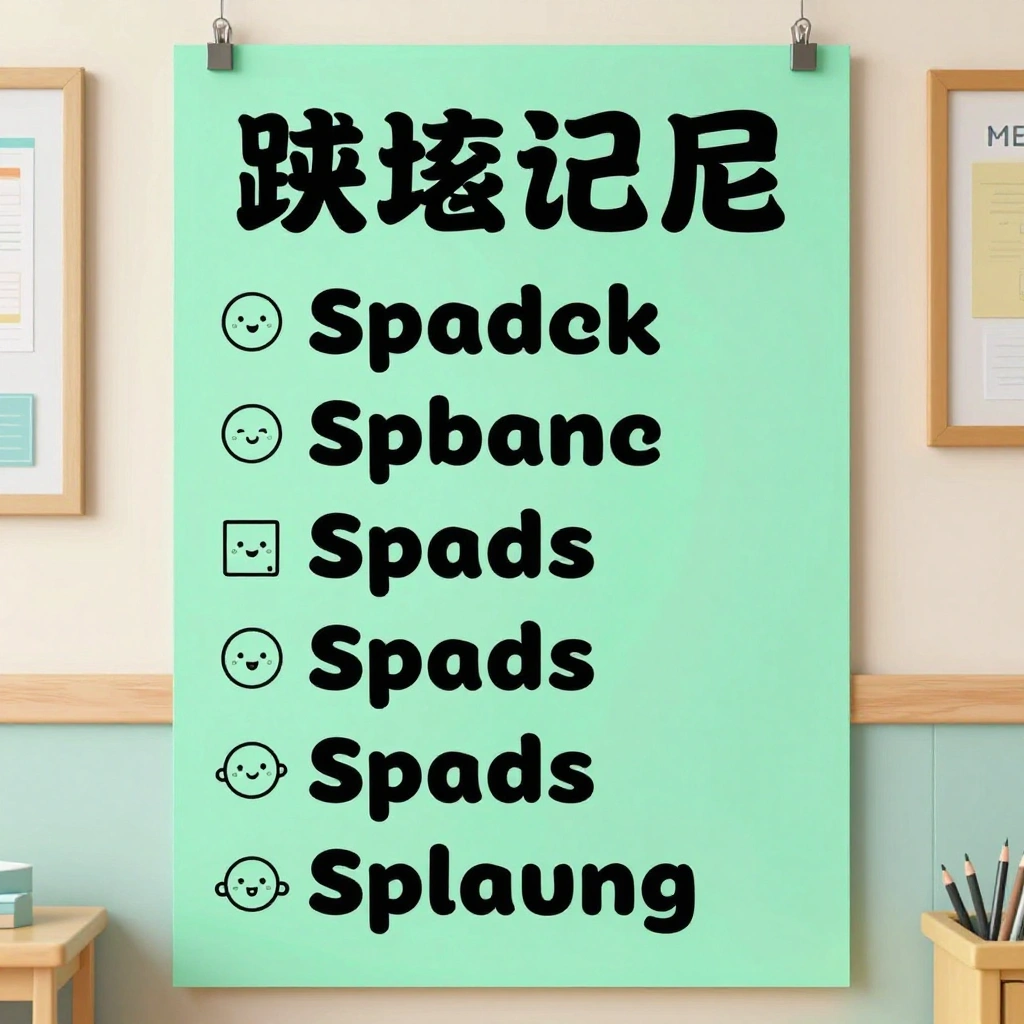
This idea is especially powerful for children and teens — or anyone learning emotional regulation skills. The poster lists go-to calming strategies in a visual, accessible format so they’re easy to remember during moments of overwhelm.
Materials:
- Bright-colored cardstock (yellow or mint)
- Bold black markers
- Small drawn icons (or printed clipart)
- Lamination pouch (optional for durability)
Steps / How to Create:
- Title the poster: “My Calm-Down Kit.”
- List 6–8 simple calming strategies with a small icon beside each (e.g., deep breath = cloud drawing, count to 10 = number illustration).
- Keep the language simple and kind — “I can take a walk,” “I can hug something soft.”
- Laminate for long-term use, especially in classrooms or therapy spaces.
Time & Difficulty: 20 minutes | Easy
Best Use Case: Kids’ classrooms, pediatric therapy, family common areas, home schooling
Creative Variation: Let children decorate their own version — making it personal increases buy-in and actual use.
9. The “Mental Health Matters” Awareness Poster
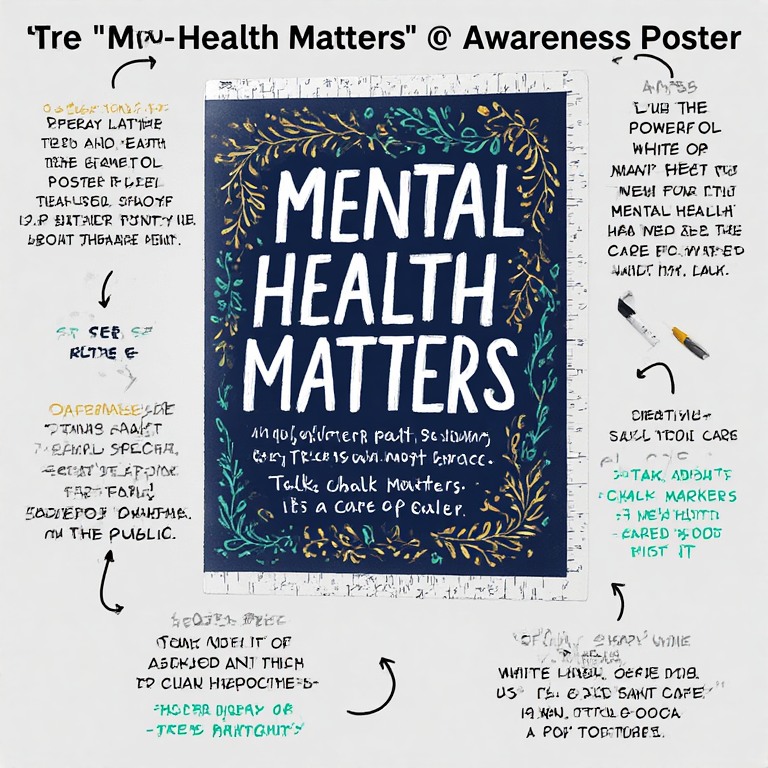
Sometimes the most powerful mental health poster is a statement. This design is bold, clear, and visually striking — meant to break stigma and open conversations in public or shared spaces.
Materials:
- Black or dark navy cardstock
- White paint pen or chalk markers
- Optional: gold or teal accent marker
- Ruler for clean lines
Steps / How to Create:
- In large, centered lettering write: “Mental Health Matters.”
- Below, add a short supporting message in smaller font: “Talk about it. Ask about it. Take care of it.”
- Create a clean, bordered design using your ruler and accent marker.
- Keep the background dark and the text bright for maximum contrast and readability.
Time & Difficulty: 15 minutes | Easy
Best Use Case: Mental health awareness events, school hallways, community boards, office spaces
Creative Variation: Add a QR code linking to a mental health resource or helpline — turning the poster into an interactive tool.
Image Prompt: Dark navy cardstock with bold white chalk lettering, clean gold rectangular border, minimal design, flat lay on dark marble surface with a single white flower accent.
10. The Personal Values Poster
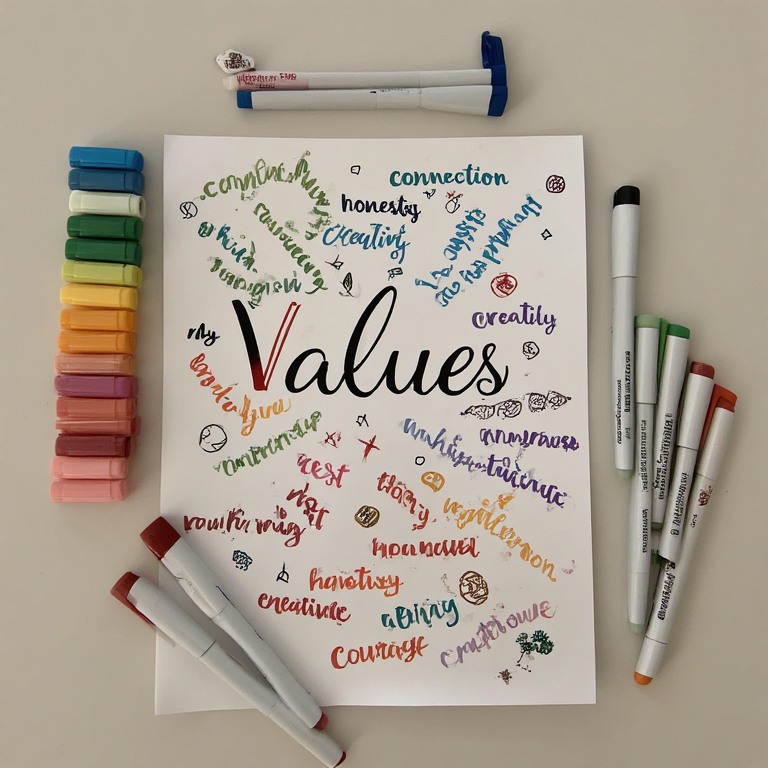
Knowing your personal values creates a compass for your mental wellbeing. This poster helps you visually anchor what matters most — and acts as a daily reminder to live in alignment with those values.
Materials:
- White or cream thick paper
- Brush pens in assorted colors
- Fine-tip black pen for outlines
- Small decorative stickers or stamps
Steps / How to Create:
- Write “My Values” as the central title in large lettering.
- List 6–10 personal values around the page (e.g., connection, honesty, creativity, rest, courage).
- Give each value its own color and a small symbol or icon.
- Arrange them in a loose constellation or circular pattern — not a rigid list.
- Display in a personal space like a journal corner, bedroom, or home office.
Time & Difficulty: 25 minutes | Medium
Best Use Case: Personal self-development, therapy homework, mindfulness practice, vision boards
Creative Variation: Create one as a gift for someone going through a hard time — personalized with their specific values makes it deeply meaningful.
Budget-Friendly Ideas Guide
You don’t need to spend much to create meaningful mental health art. Here’s how to keep costs down:
- Use what you have: Printer paper, old magazines for collage, and basic school markers are enough to start.
- Dollar store finds: Cardstock packs, paint pens, and basic frames are often available for under $5.
- Free printable fonts: Sites like Google Fonts and Canva offer free typography you can trace by hand.
- Reuse and laminate: One laminated poster can last years — far more cost-effective than reprinting.
- Group activity savings: If creating posters for a class or group, split material costs among participants.
Common Mistakes to Avoid
1. Overcrowding the Design Adding too many words or images makes a poster hard to read and visually stressful — the opposite of what you want. Keep it simple. One clear message is always stronger than five competing ones.
2. Using Hard-to-Read Fonts or Colors Low contrast (like yellow text on white) or overly decorative handwriting can make a poster inaccessible. Always test readability from a distance before finalizing.
3. Skipping the “Why” Behind the Design A poster without intention becomes just decoration. Before you start, ask: Who is this for? What feeling should it create? What action should it inspire? Answering this shapes every design decision.
Tips for Best Results
- Keep your message to one core idea — clarity creates emotional impact.
- Use color intentionally — blues and greens feel calming; yellows and oranges feel energizing.
- Test placement before hanging — see how the poster feels in context, not just in your hands.
- Involve others when possible — collaborative posters build community and shared ownership.
- Laminate anything meant for long-term use — especially in classrooms or therapy spaces.
- Add texture — mixing mediums (watercolor + marker + collage) creates a richer, more human feel.
FAQs
Q: What size should a mental health poster be? A: For bedroom or office walls, A3 (11×17 inches) works well. For classrooms or public spaces, go larger — A2 or even full poster size (18×24 inches) ensures visibility from a distance.
Q: Do I need artistic skills to make these posters? A: Not at all. Most of these ideas are designed for beginners. Clean handwriting, basic shapes, and a thoughtful message are all you need. The imperfections make it more human.
Q: Can these posters be used professionally in therapy or schools? A: Absolutely. Several of these ideas — the feelings wheel, breathing exercise poster, and calm-down kit — are specifically designed with therapeutic and educational settings in mind.
Q: What materials are best for long-lasting posters? A: Use cardstock instead of regular printer paper, permanent markers instead of washable ones, and consider laminating or framing anything you want to keep for more than a few months.
Q: Can kids make these posters? A: Yes! Ideas 4, 8, and 1 are especially kid-friendly. Involving children in making their own mental wellness tools increases their engagement and emotional connection to the message.
Q: Where’s the best place to display a mental health poster? A: Anywhere you spend consistent time — your bedroom, bathroom mirror, desk, kitchen, or office. The more often you see it, the more impact it has.
Conclusion
Mental wellness doesn’t have to be complicated or expensive — sometimes it just looks like a piece of paper with the right words on it. These 10 ideas prove that creativity and care can coexist beautifully. Whether you’re making a poster for yourself, your classroom, your family, or someone who needs a reminder that they matter — you’re doing something meaningful.
Pick one idea, gather what you already have at home, and make something real today. Your walls — and your mind — will thank you.