12 Unique Watercolor Cards Ideas That Feel Extra Personal
Whether you’re looking for a heartfelt gift or just love the meditative flow of painting, watercolor cards ideas are some of the most satisfying DIY projects you can explore. There’s something uniquely special about a handmade card — it carries your time, your creativity, and your care all in one small piece of paper.
This article walks you through 12 beautiful and beginner-friendly watercolor card designs you can make at home. Each one is practical, achievable, and genuinely lovely.
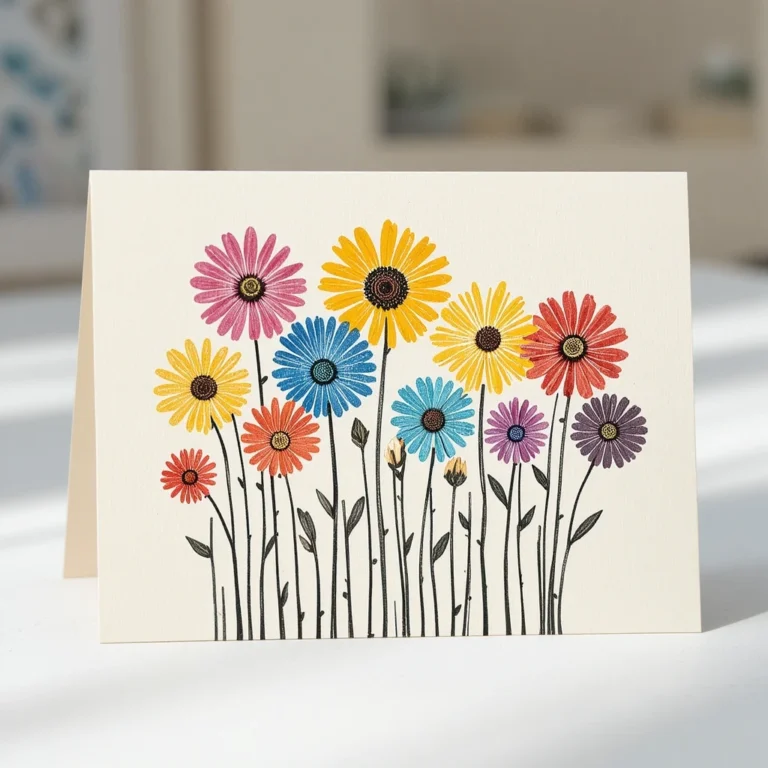
Idea 1: Soft Floral Bouquet Card
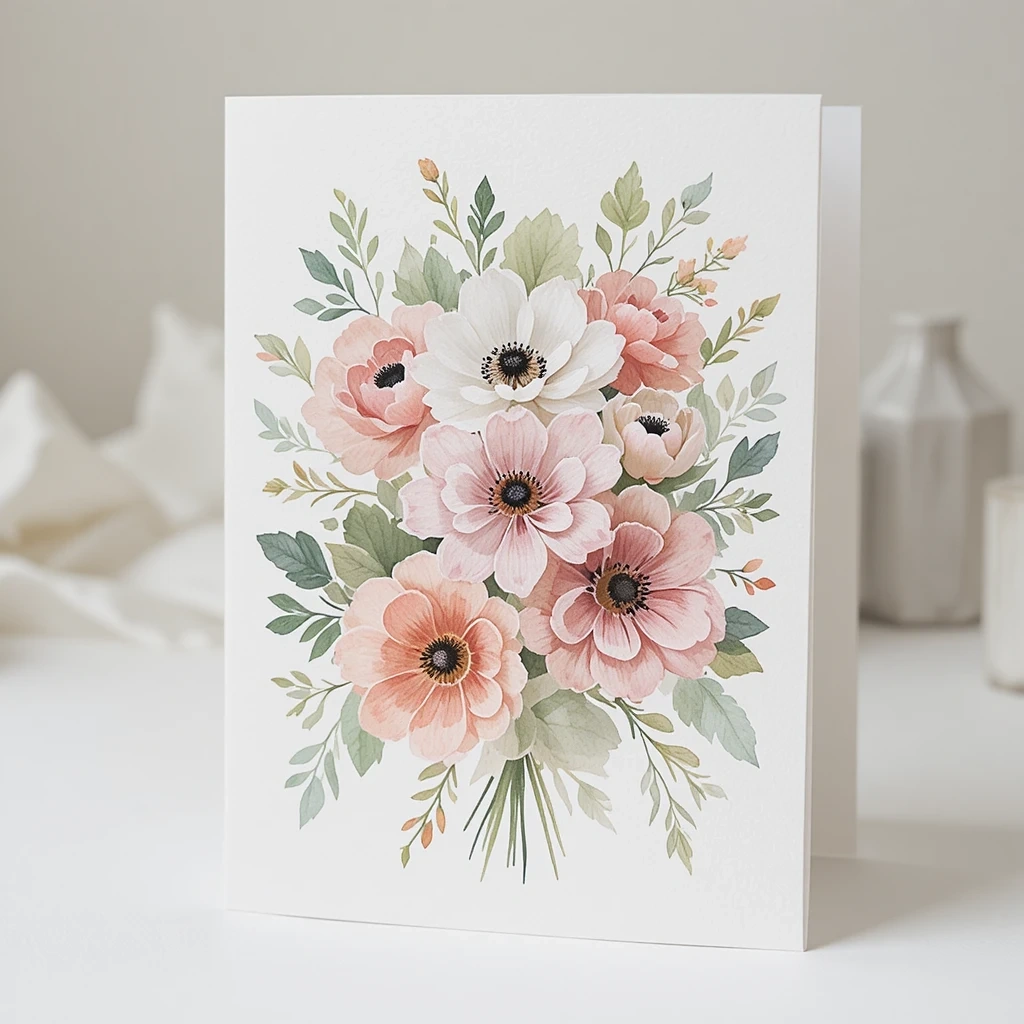
A loose, impressionistic bouquet in soft pinks and greens is one of the most timeless watercolor cards ideas you’ll ever try. The beauty of this design is in its imperfection — the blooms don’t need to be realistic, just feel alive and joyful.
Materials:
- Cold-press watercolor paper (140 lb)
- Round brushes (size 4 and 8)
- Watercolor paints: pink, coral, sage green, white
- Pencil (light sketch)
- Fine-tip pen (optional)
Steps:
- Lightly sketch 3–5 flower shapes and a few leaves with a pencil.
- Wet the paper slightly and drop pink and coral watercolor loosely onto each flower.
- Add green for stems and leaves using a fine brush.
- Let dry completely, then add fine pen details if desired.
- Fold watercolor paper into a card shape and trim to size.
Time: 20–30 min | Difficulty: Easy
Best Use Case: Birthday gifts, Mother’s Day, thank-you cards
Creative Variation: Use purple and yellow tones for a wildflower meadow feel.
Idea 2: Night Sky & Stars Card
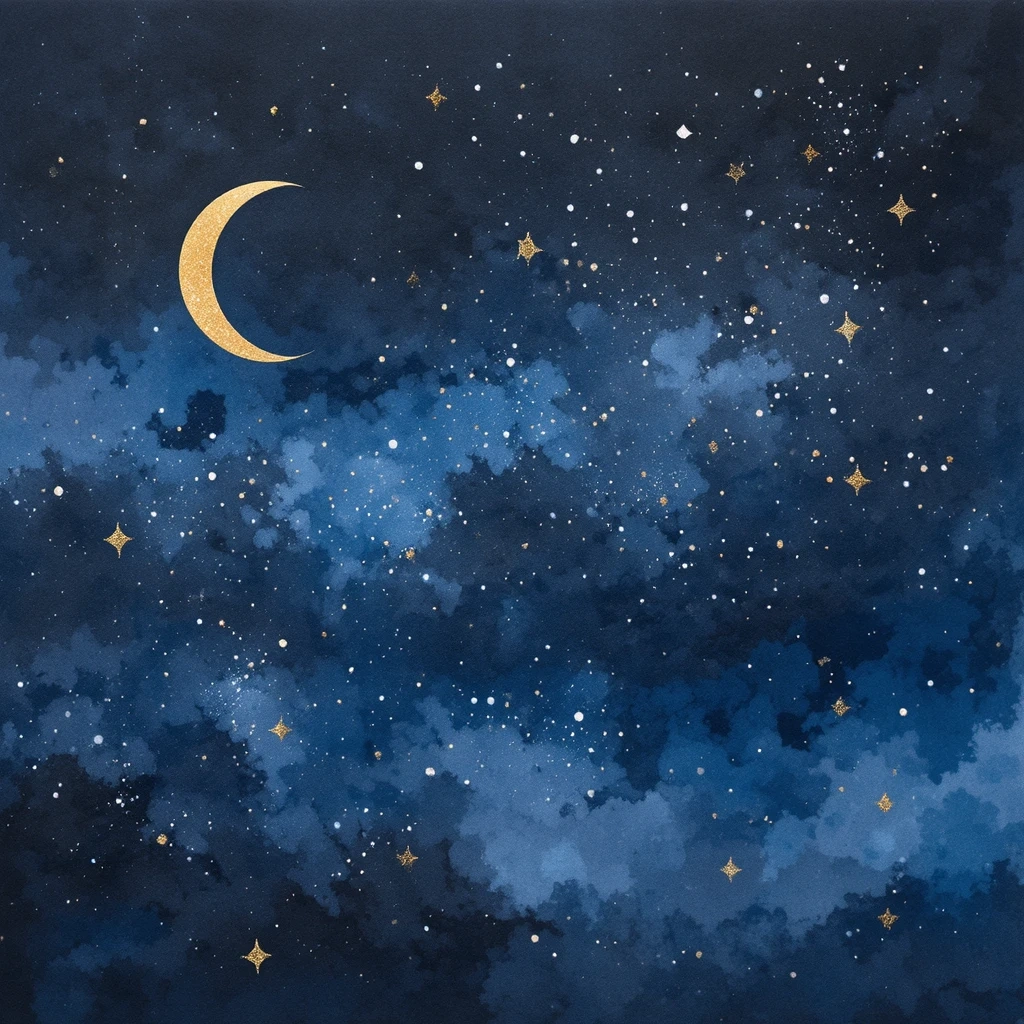
A deep indigo and black gradient sky with dots of gold or white stars creates a stunning effect that looks far more complex than it actually is. Perfect for anyone who loves celestial themes.
Materials:
- Watercolor paper
- Prussian blue, indigo, and black watercolor
- White gel pen or white gouache
- Round brush (size 10 for sky, size 2 for stars)
Steps:
- Wet the entire card area with clean water.
- Drop in blues from top to bottom, letting them blend naturally.
- Add black near the bottom edges while still wet.
- Once dry, use a white gel pen to dot stars and a crescent moon.
- Optional: add gold ink for a constellation effect.
Time: 15–25 min | Difficulty: Easy
Best Use Case: Graduation, new year, sympathy, or “thinking of you” cards
Creative Variation: Add a tiny silhouette of mountains or a city skyline at the bottom.
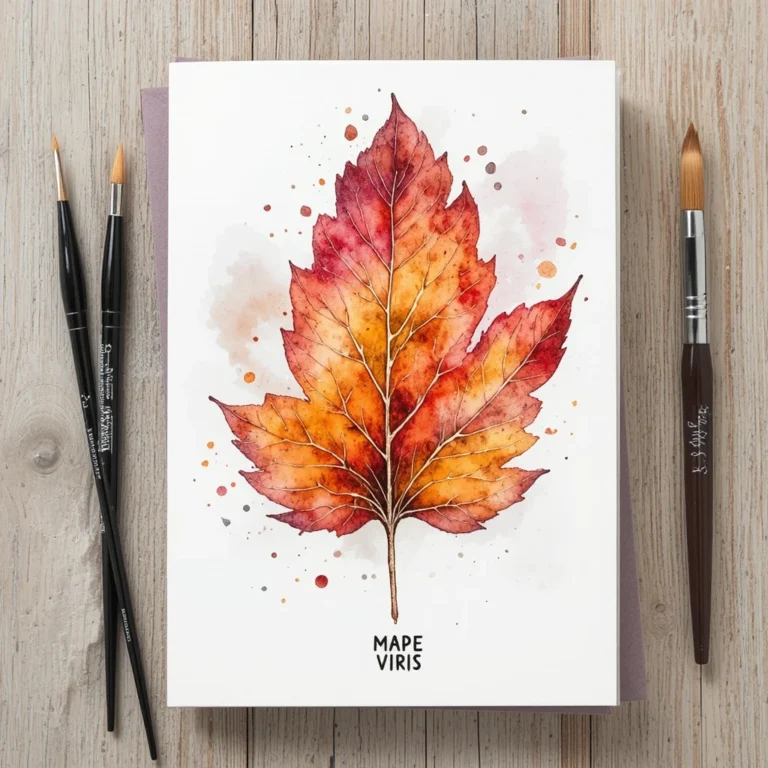
Idea 3: Simple Watercolor Leaves Card
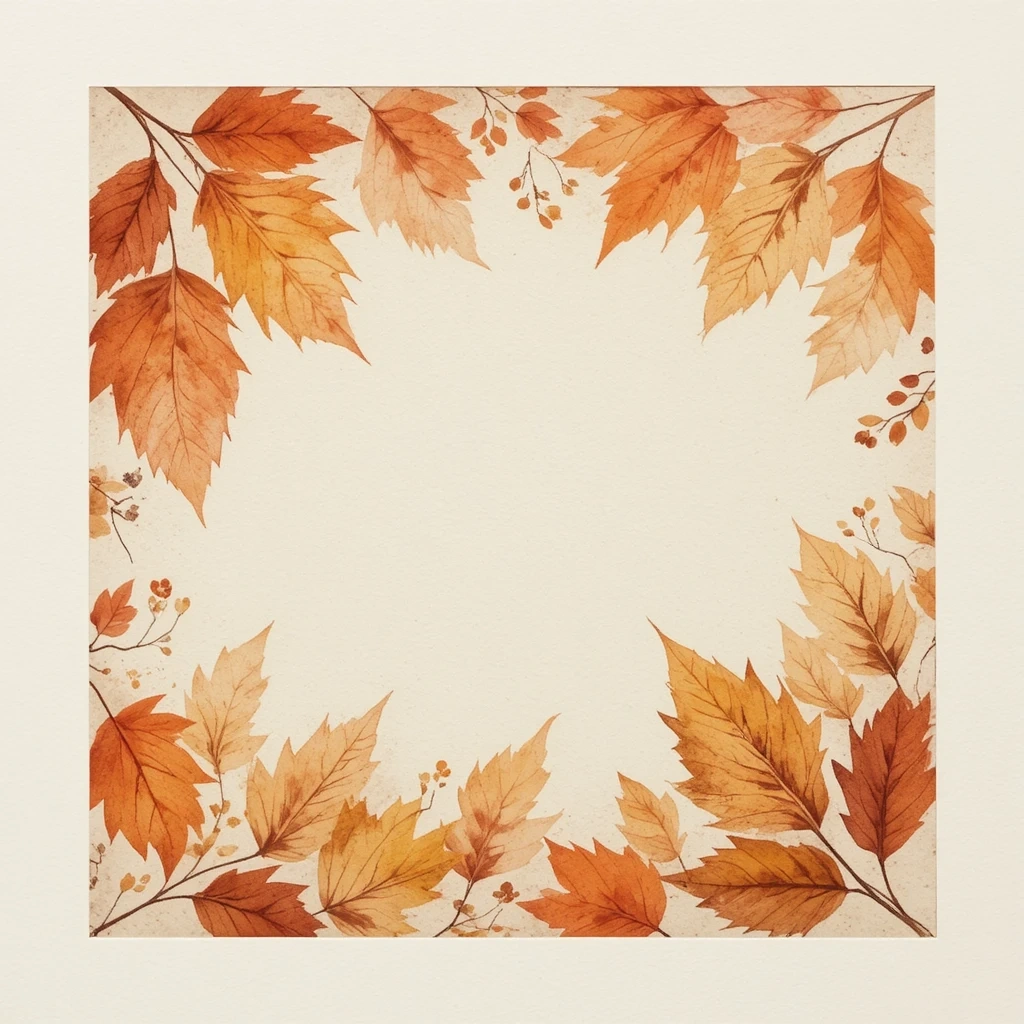
Minimalist leaf designs in warm autumn tones — ochre, rust, and olive — make for a timeless and modern card that suits almost any occasion.
Materials:
- Watercolor paper
- Yellow ochre, burnt sienna, olive green, deep red
- Flat brush (size 6)
- Masking tape (to frame the card)
Steps:
- Apply masking tape around the edges to create a clean frame.
- Paint simple leaf shapes by pressing the flat brush down and lifting.
- Layer different tones for depth.
- Add small vein details with a fine brush once dry.
- Remove masking tape carefully for a crisp border.
Time: 15–20 min | Difficulty: Easy
Best Use Case: Autumn greetings, housewarming, teacher appreciation
Creative Variation: Paint tropical leaves in emerald and lime for a summer version.
Idea 4: Sunset Landscape Card
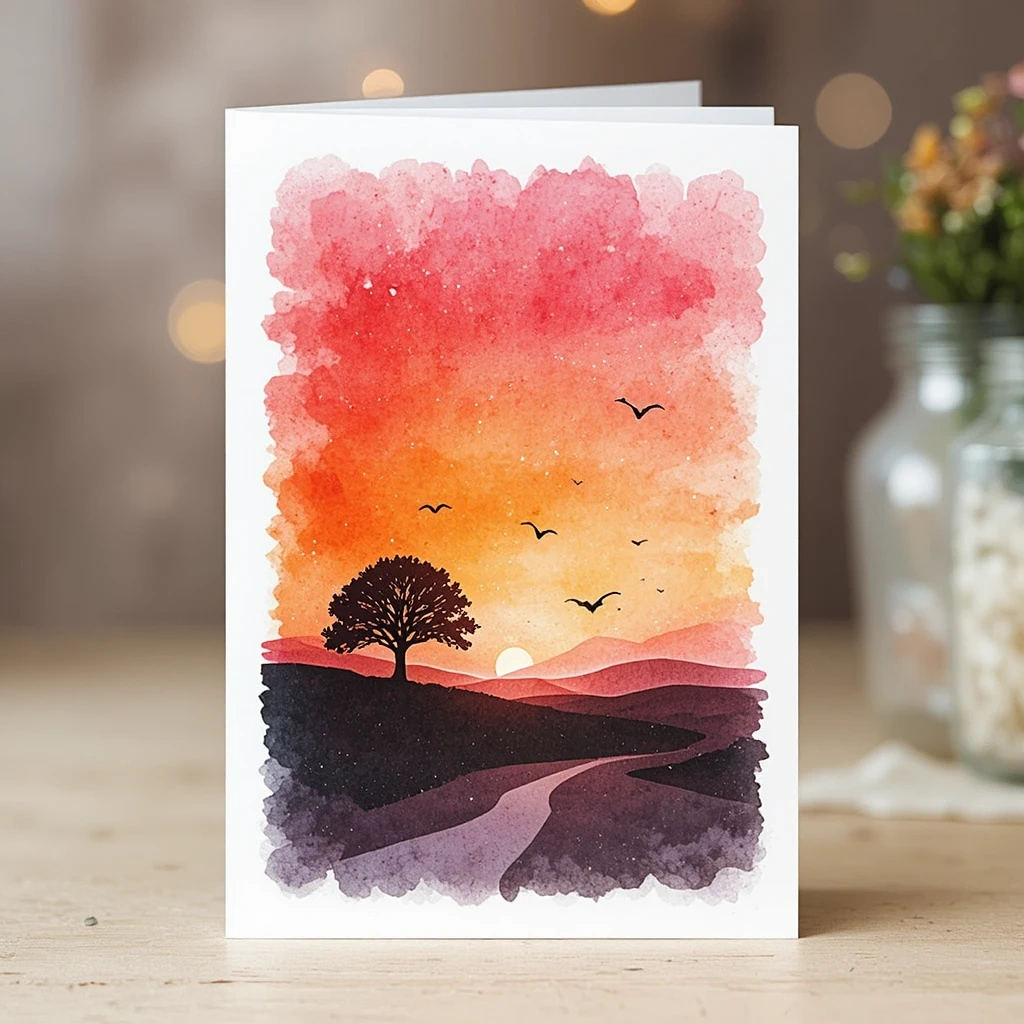
One of the Most Stunning Watercolor Cards Ideas for Beginners
A horizon sunset is one of those watercolor cards ideas that looks impressive but requires only the most basic technique — a wet-on-wet sky wash.
Materials:
- Watercolor paper
- Orange, yellow, magenta, lavender
- Flat brush (size 12)
- Round brush (size 4 for details)
Steps:
- Wet the top two-thirds of the paper.
- Apply yellow near the horizon, bleeding into orange, then magenta toward the top.
- Add a hint of lavender at the very top edge.
- Once dry, paint a simple dark silhouette of trees or hills along the horizon.
- Fold and trim.
Time: 20–25 min | Difficulty: Easy
Best Use Case: Anniversary cards, travel-themed notes, nature lovers
Creative Variation: Add a tiny sailboat or birds in the distance.
Idea 5: Watercolor Citrus Slices Card
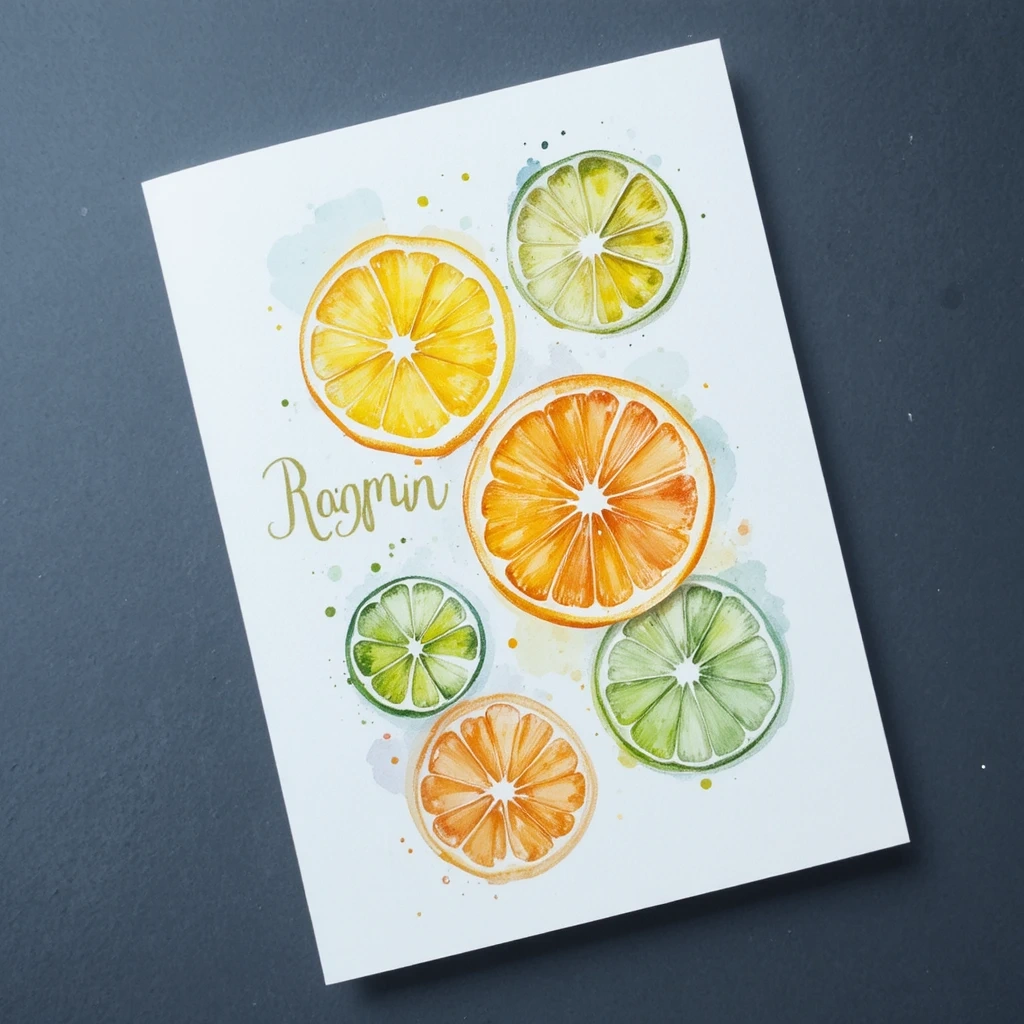
Bright lemon, orange, and lime cross-sections painted in vibrant watercolor make a cheerful, summery card that feels fresh and fun.
Materials:
- Watercolor paper
- Lemon yellow, cadmium orange, lime green
- Round brushes (size 4 and 6)
- Fine-tip pen (optional for outlines)
Steps:
- Sketch simple circles lightly in pencil.
- Paint alternating wedge shapes within each circle for the fruit segments.
- Leave white gaps between segments to simulate the pith.
- Add a thin ring of color around the outside for the rind.
- Add optional ink outlines when dry for a graphic illustration look.
Time: 20–30 min | Difficulty: Easy–Medium
Best Use Case: Summer birthdays, bridal showers, kitchen-themed gifts
Creative Variation: Add a watercolor banner or text like “You’re a Gem” below the fruit.
Idea 6: Loose Watercolor Feather Card
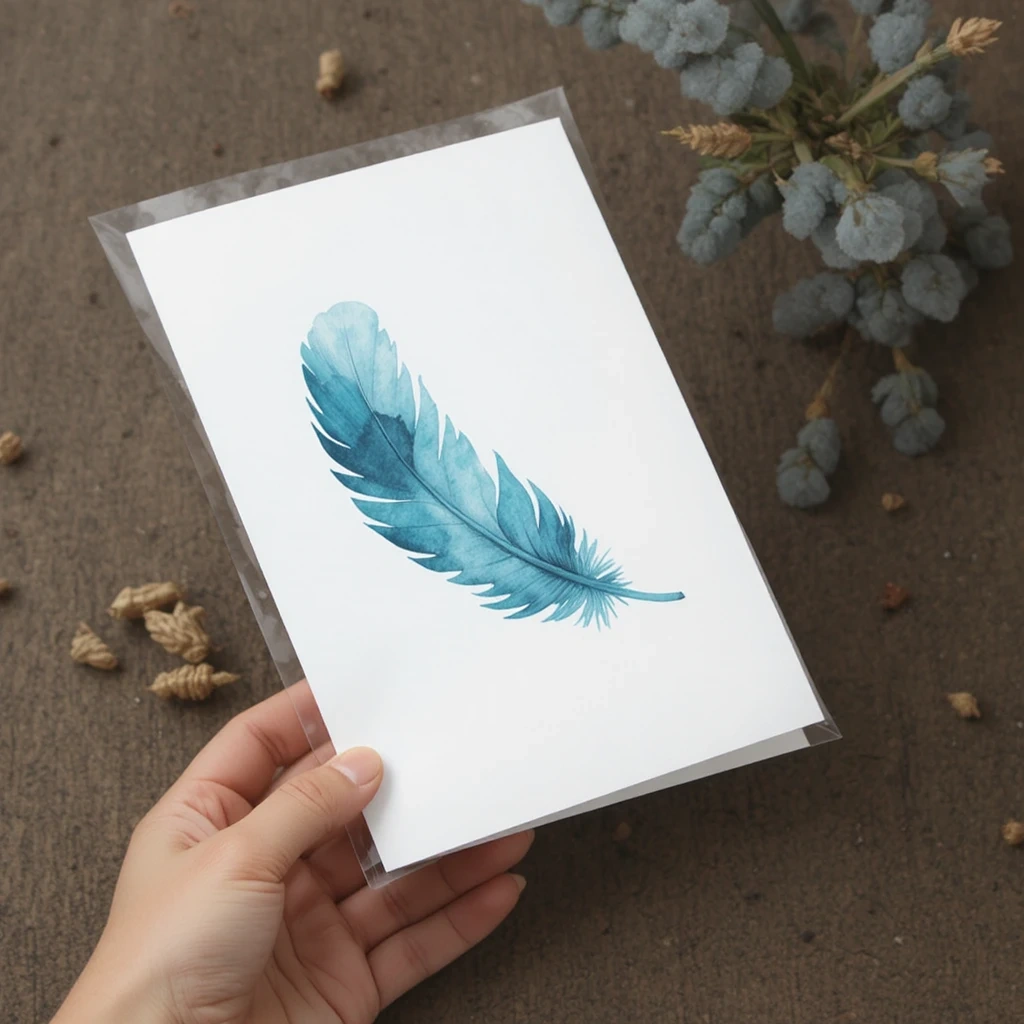
A single elegant feather painted in a soft ombre — from deep teal to pale sky blue — creates a refined, artistic card that feels both modern and timeless.
Materials:
- Watercolor paper
- Teal, sky blue, silver/grey watercolor
- Round brush (size 2 and 6)
- Pencil for feather sketch
Steps:
- Lightly sketch the feather outline.
- Paint the spine of the feather first with a thin brush.
- Use side strokes to paint the barbs, working from spine outward.
- Blend teal to sky blue as you move from base to tip.
- Add fine details when dry with the tip of your round brush.
Time: 20–25 min | Difficulty: Medium
Best Use Case: Sympathy cards, spiritual themes, elegant gift notes
Creative Variation: Paint three feathers of different sizes in a trio arrangement.
Idea 7: Rainy Day Umbrella Card
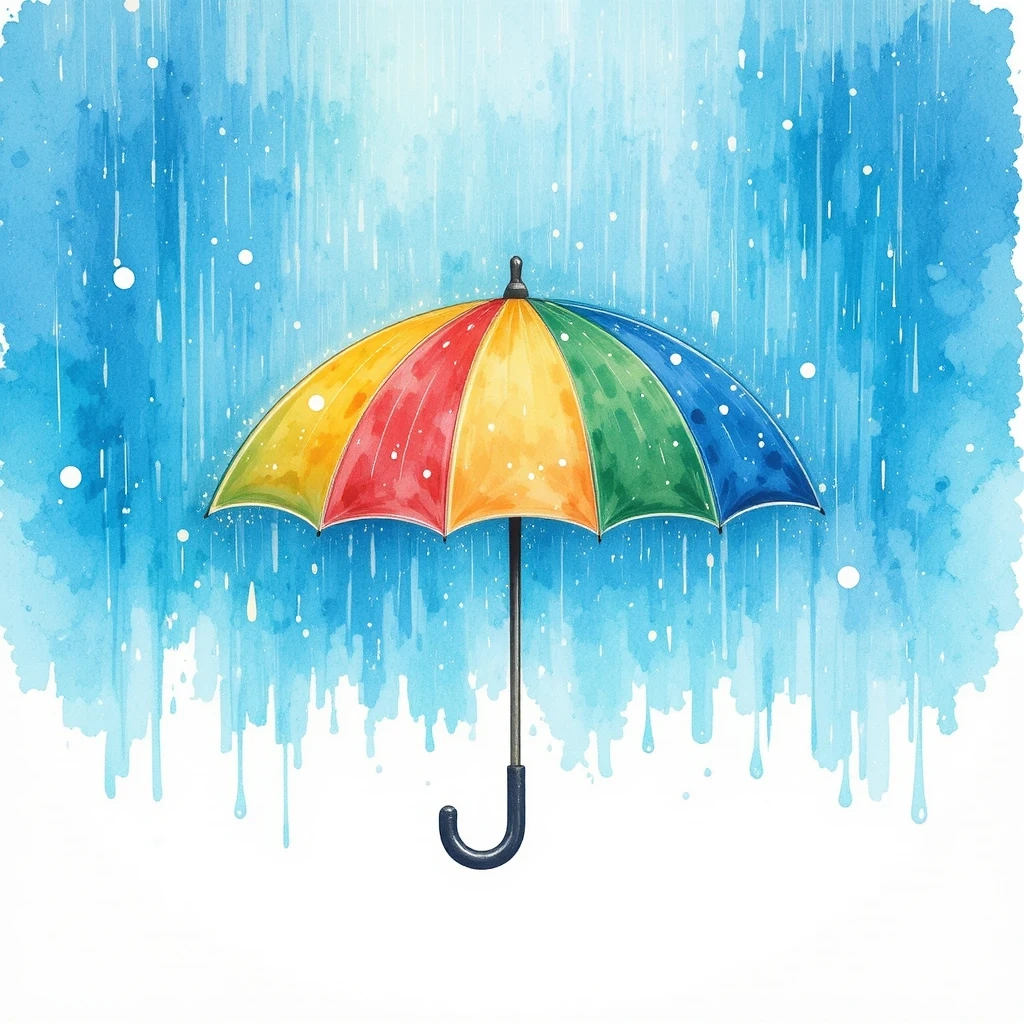
A Fun Take on Watercolor Cards Ideas for Kids and Adults
This playful design features a colorful umbrella beneath a soft watercolor rain — a perfect pick-me-up card for a friend having a rough week.
Materials:
- Watercolor paper
- Rainbow colors for umbrella, light blue for rain
- Round brush (size 6 and 2)
- White gel pen
Steps:
- Paint the umbrella in wedge sections, using a different color for each section.
- Paint a simple curved handle below.
- Once dry, use a very diluted blue and a fine brush to add rain streaks across the background.
- Use a white gel pen to add tiny white dots or sparkle effects.
Time: 20–30 min | Difficulty: Easy
Best Use Case: Cheer-up cards, “thinking of you,” rainy season greetings
Creative Variation: Add a tiny pair of rain boots below the umbrella for extra charm.
Idea 8: Abstract Geometric Watercolor Card
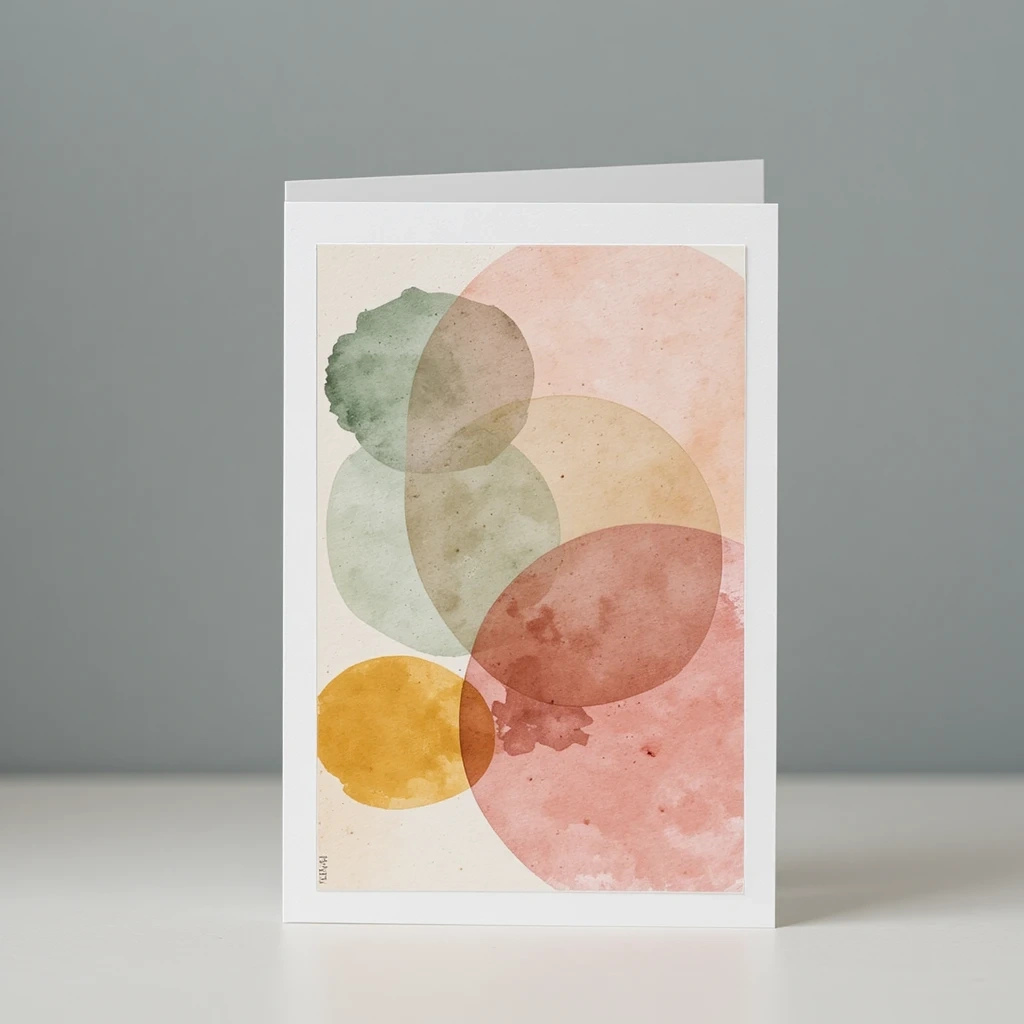
Overlapping triangles, squares, or diamond shapes washed in soft complementary colors create a modern, gallery-worthy card that’s surprisingly easy to make.
Materials:
- Watercolor paper
- 3–4 complementary colors (e.g., dusty rose, sage, mustard, cream)
- Flat brush
- Ruler and pencil
- Masking tape
Steps:
- Lightly sketch geometric shapes across the card using a ruler.
- Paint each shape with a single wash of color.
- Where shapes overlap, layer a second color to create a new tone.
- Let dry fully before removing any masking tape borders.
- Outline shapes with a fine pen for a more graphic look if desired.
Time: 25–30 min | Difficulty: Easy–Medium
Best Use Case: Modern gift cards, housewarming, wedding stationery
Creative Variation: Try a black outline pen before painting for a stained glass window effect.
Idea 9: Delicate Cherry Blossom Card
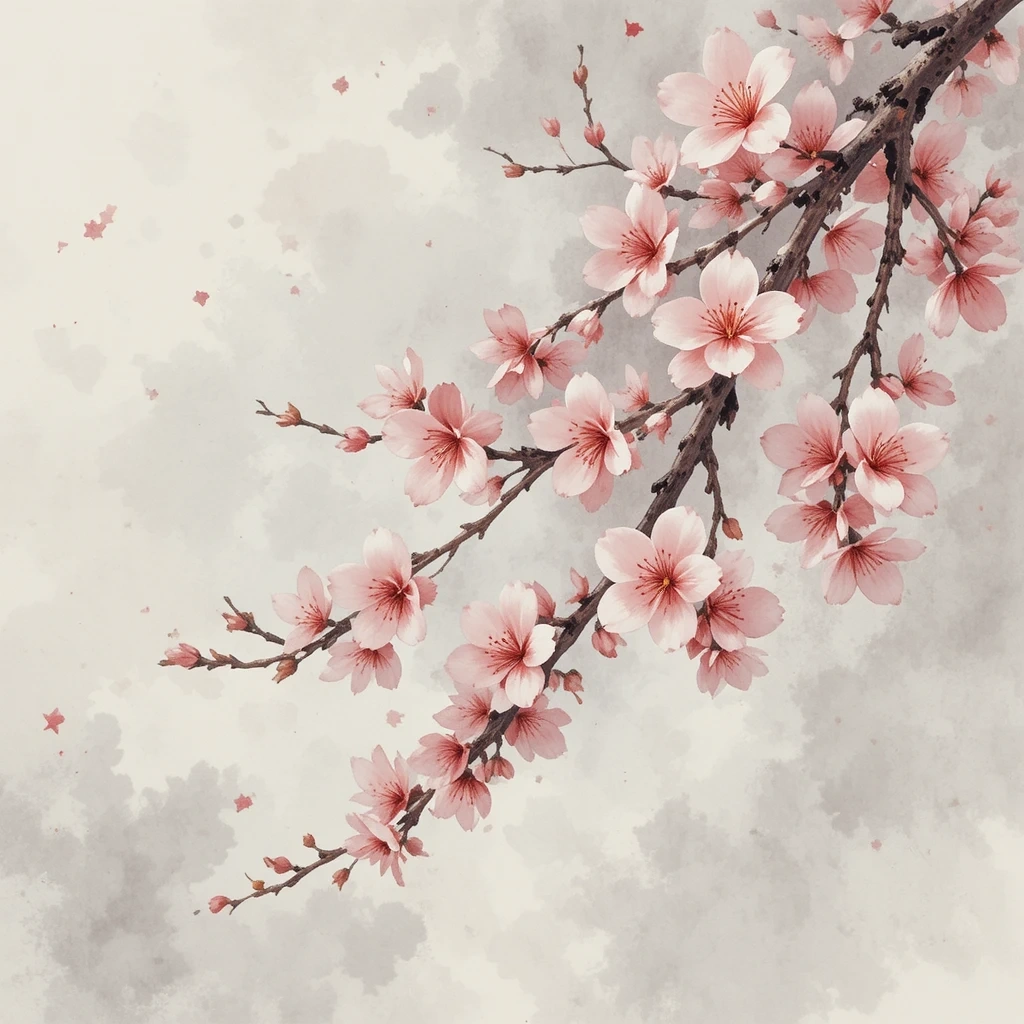
Watercolor Cards Ideas Inspired by Japanese Art
Few things capture spring better than soft pink cherry blossoms painted with a dry-brush technique on a pale wash background.
Materials:
- Watercolor paper
- Pale pink, deep rose, brown, light green
- Round brush (size 2, 4, and 10)
- White gouache (optional)
Steps:
- Paint a loose pale blue-grey wash as the background.
- Once dry, paint thin brown branches using a fine brush.
- Dab clusters of soft pink petals at branch tips using the round brush.
- Add a touch of deep rose to the center of each blossom.
- Dot tiny yellow centers with the tip of your brush.
Time: 25–30 min | Difficulty: Medium
Best Use Case: Spring occasions, Japanese culture appreciation, elegant notes
Creative Variation: Leave the background white for a cleaner, Scandinavian-inspired look.
Idea 10: Watercolor Galaxy Swirl Card
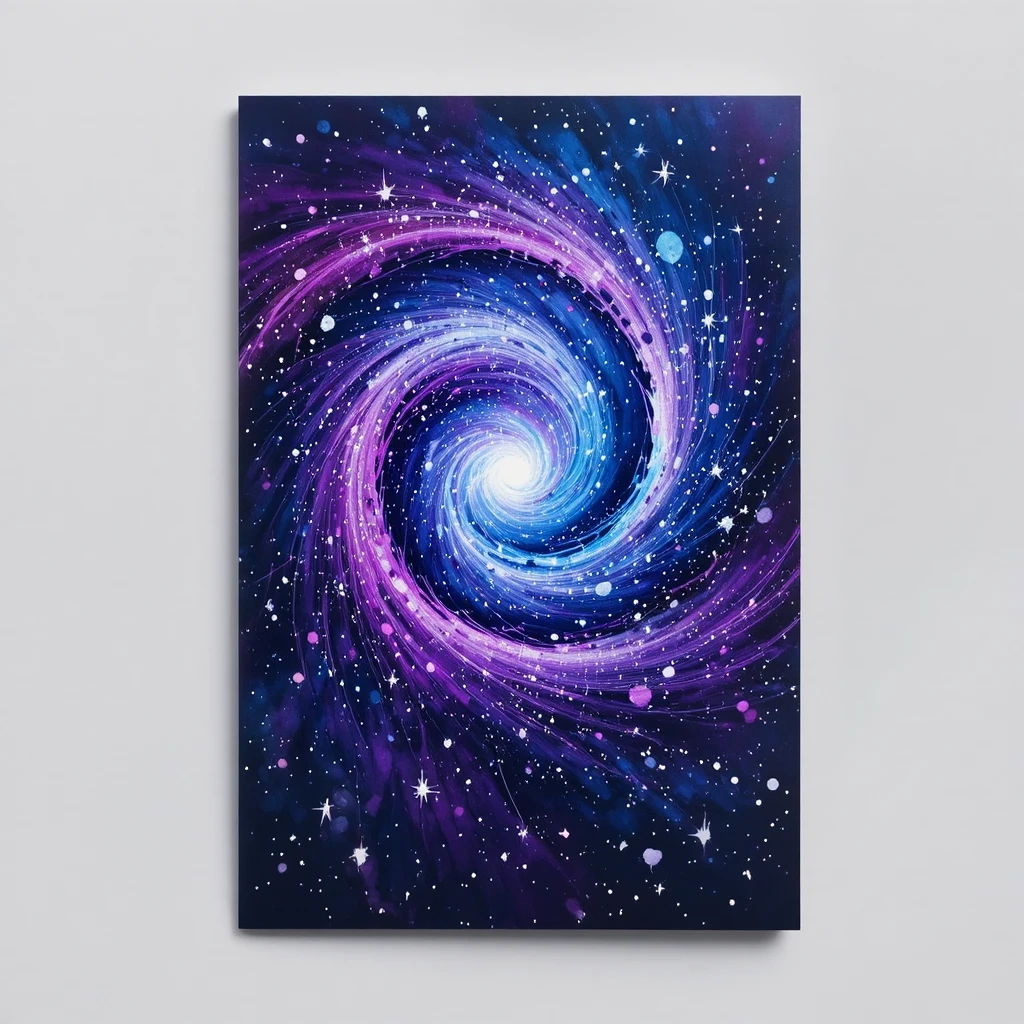
A swirling galaxy in purples, blues, and pinks with scattered white stars is one of the most dramatic and beautiful watercolor cards ideas you can create in under 30 minutes.
Materials:
- Watercolor paper
- Deep purple, cobalt blue, magenta, black
- Large round brush
- White splatter (toothbrush technique)
- Salt (optional)
Steps:
- Wet the paper and apply circular swirls of purple, blue, and magenta.
- While wet, add black around the edges to deepen the space effect.
- Sprinkle salt for texture while still wet, then brush off when dry.
- Splatter white paint using an old toothbrush for stars.
- Let dry fully before folding.
Time: 20–30 min | Difficulty: Easy
Best Use Case: Science lovers, space enthusiasts, dramatic birthday cards
Creative Variation: Add a small painted planet or ringed Saturn in one corner.
Idea 11: Watercolor Cactus Card
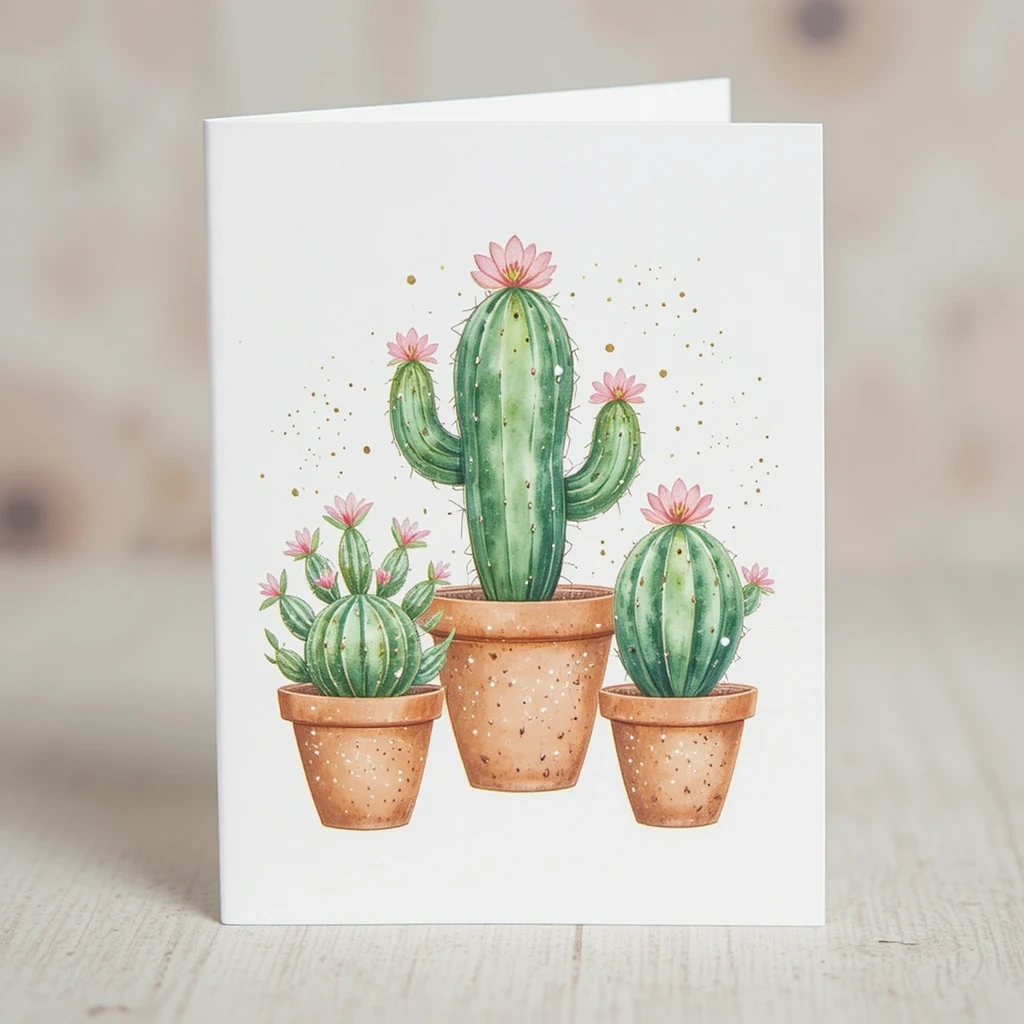
Cute, minimal desert cacti painted in soft greens with tiny pink blooms make a friendly and modern card that suits any age and personality.
Materials:
- Watercolor paper
- Olive green, sage green, pale pink, terracotta
- Round brush (size 4 and 2)
- Fine pen (optional)
Steps:
- Paint simple cactus shapes — tall columns, rounded paddles, a small round cactus.
- Add a second tone of green for shadow on one side of each cactus.
- Paint tiny pink or yellow flowers on the tips.
- Add a simple terracotta pot or soil line at the base.
- Add fine pen outlines for a cute illustrative style.
Time: 20–25 min | Difficulty: Easy
Best Use Case: Succulent lovers, housewarming, modern minimalist aesthetic cards
Creative Variation: Paint a full desert scene with a sun setting behind distant mesas.
Idea 12: Personalized Monogram Watercolor Card
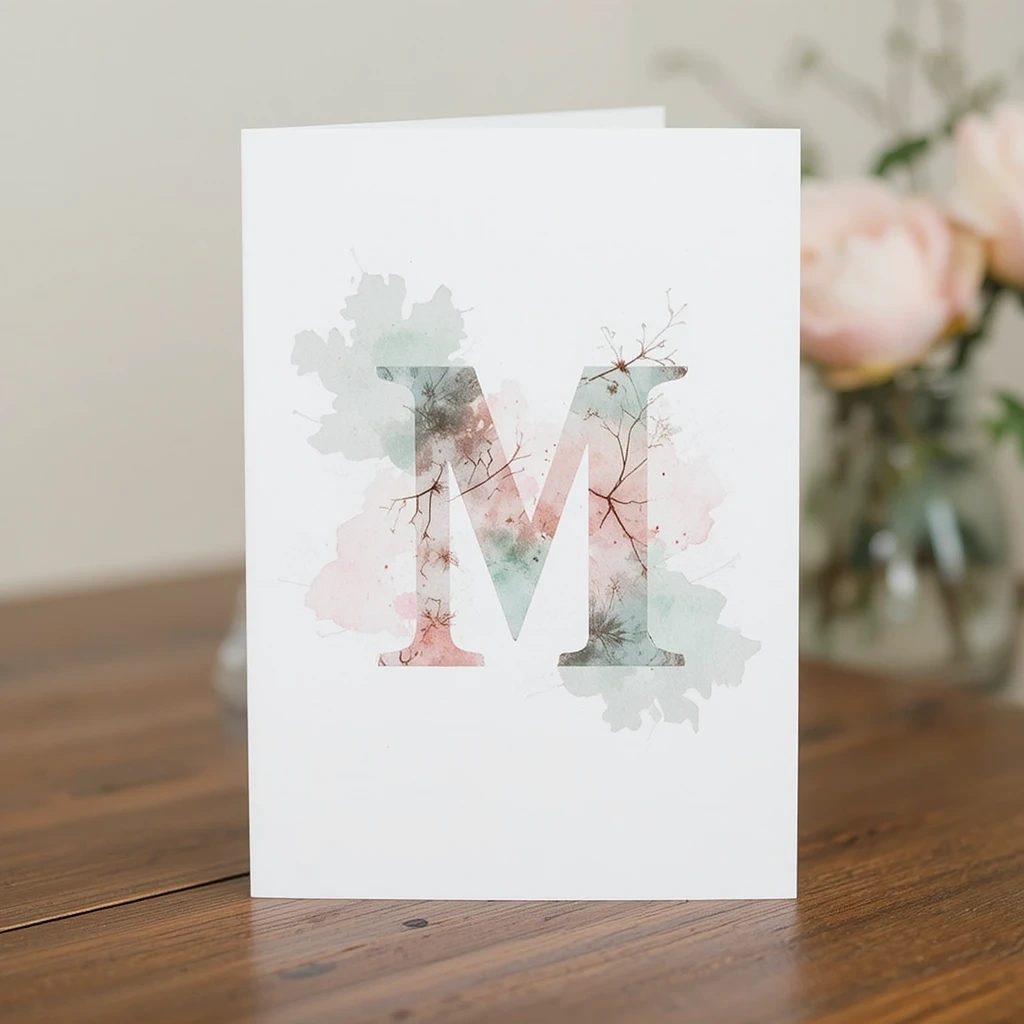
A bold watercolor-washed letter — the recipient’s initial — set against a clean white background is one of the most personal and elegant watercolor cards ideas possible.
Materials:
- Watercolor paper
- Any 2–3 colors that complement each other
- Flat brush (size 8 or 10)
- Pencil and eraser
- Fine-tip pen (for the letter outline)
Steps:
- Lightly sketch a large block letter centered on the card.
- Outline the letter cleanly with a fine pen.
- Fill the letter with a wet-on-wet wash of your chosen colors.
- Let the colors bloom and blend naturally inside the letter’s shape.
- Erase pencil lines once dry and fold.
Time: 15–20 min | Difficulty: Easy
Best Use Case: Personalized birthday gift tags, wedding stationery, monogram bookmarks
Creative Variation: Add tiny florals or dots around the letter for a decorative frame.
Best Occasions to Use These Watercolor Card Ideas
Watercolor cards feel appropriate for almost any occasion — and that’s part of their magic. Here’s a quick guide to matching the right card to the right moment:
- Birthdays — Florals, citrus, galaxy, or monogram cards
- Thank You Notes — Leaves, feather, or abstract geometric cards
- Sympathy Cards — Night sky, feather, or cherry blossom cards
- Seasonal Greetings — Cherry blossom (spring), citrus (summer), leaves (autumn), night sky (winter)
- Everyday Cheer — Umbrella, cactus, or galaxy cards
- Weddings & Engagements — Monogram, florals, or abstract watercolor cards
Common Mistakes to Avoid
1. Using regular copy paper instead of watercolor paper Watercolor paper is thicker and absorbs water without warping or tearing. Regular paper will buckle and ruin your design. Always use at least 140 lb cold-press paper for cards.
2. Adding too much detail while the paint is still wet Trying to paint details on a wet surface causes colors to bleed uncontrollably. Always let your base wash dry completely before adding fine details or second layers.
3. Using too much water on small card areas On small card-sized pieces, excess water pools quickly and causes dark edges or backruns. Use a damp — not soaked — brush, and blot excess water with a tissue when needed.
Tips for Best Results
- Pre-fold your watercolor paper before painting so the crease is clean and dry.
- Use a light box or window to trace letters or shapes if you’re not confident sketching freehand.
- Keep a test sheet nearby to try color mixes before applying them to your card.
- Work in good lighting — natural light shows watercolor tones most accurately.
- Add a second sheet of plain paper inside the card to hide the back of your painting and write your message cleanly.
- Seal the finished card with a fixative spray to protect the paint if you plan to mail it.
FAQs
Q: Do I need expensive watercolor supplies to make these cards? Not at all. Student-grade paints like Winsor & Newton Cotman or Sakura Koi are affordable and work beautifully for card-making. The most important investment is good watercolor paper.
Q: Can I use watercolor paint on regular cardstock? You can try, but the results are much better on proper watercolor paper. Cardstock tends to warp and absorb water unevenly, which affects color flow and blending.
Q: How do I write on a watercolor card without ruining the design? Write on the inside of the card with a gel pen or fine-tip marker. If you want to add text to the front, wait until the paint is completely dry (overnight if possible) and use a waterproof pen.
Q: What’s the best way to protect a finished watercolor card? A light coat of fixative spray (like Krylon) will seal the paint and prevent smudging. You can also place a sheet of glassine paper over the front before slipping it into an envelope.
Q: Are these ideas suitable for kids? Absolutely. The umbrella, cactus, citrus, and night sky designs are especially great for children. Simplify the steps and let them enjoy the process more than the final result.
Q: Can I sell these watercolor cards? Yes! Handmade watercolor cards sell well on platforms like Etsy. Make sure to invest in quality paper and envelopes for a professional presentation.
Conclusion
There’s no wrong way to make a watercolor card. Whether you go bold with a galaxy swirl or keep it soft with cherry blossoms, every card you create carries a little piece of your personality. The 12 ideas in this guide are just a starting point — once you begin, you’ll find your own style, your own color combinations, and your own creative rhythm.
So pick up a brush, choose your colors, and start painting. Someone out there is going to love what you make.